
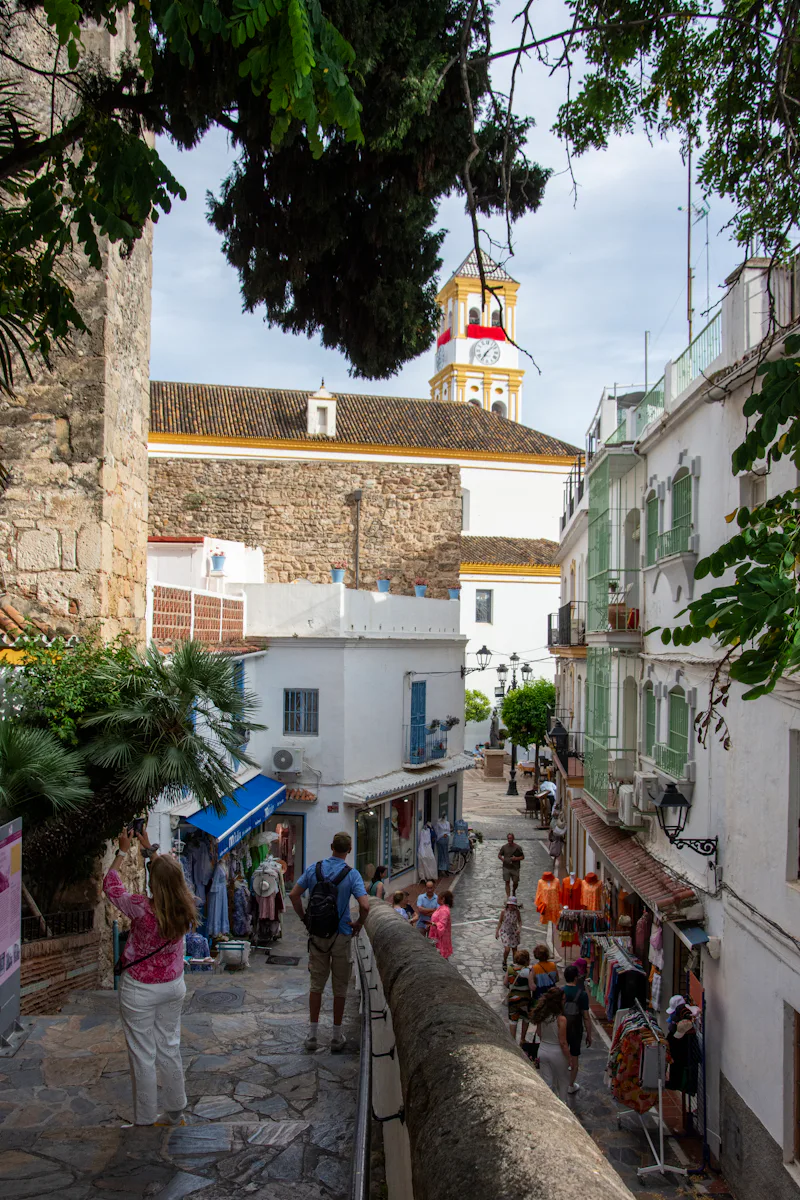
Five minutes’ walk up from the beach, the glitz of Marbella disappears. Marbella Old Town, known locally as the Casco Antiguo, is a tangle of whitewashed lanes, flower pots, tiny squares and churches that were already old when the first tourists arrived. It is compact, car-free and free to explore, and for many visitors it ends up being the part of Marbella they remember most.
This guide covers what to see in Marbella’s Old Town, a self-guided walking route with a map, where to eat, where to park, how long you need, and which hotels put you right inside the historic walls.
Marbella Old Town at a glance
- Heart of the quarter: Plaza de los Naranjos (Orange Square), laid out in 1485
- Time needed: 2 to 3 hours to see the highlights, half a day with lunch
- Cost: free to wander; small fee for the engraving museum
- Best time: morning for photos and quiet lanes, evening for dinner on the squares
- Getting there: 5 to 10 minutes’ walk from the seafront; park at Plaza de la Victoria
- Stay inside it: see our best boutique hotels in Marbella Old Town
Where Is Marbella Old Town?
The Old Town sits in the centre of Marbella, just north of the main road through town (Avenida Ricardo Soriano) and a short walk inland from the beach at Playa de la Venus. Its southern edge is marked by the leafy Parque de la Alameda and Avenida del Mar, a pedestrian boulevard that runs straight down to the promenade.
The quarter grew up inside the walls of a Moorish fortress, which explains its winding, irregular street plan. After the Catholic Monarchs took the town in 1485, a new Christian centre was built around Plaza de los Naranjos, and most of the monuments you see today date from the 15th to the 18th centuries. Streets are mostly pedestrian and cobbled, so wear comfortable shoes.
Top Things to Do in Marbella Old Town
1. Plaza de los Naranjos (Orange Square)
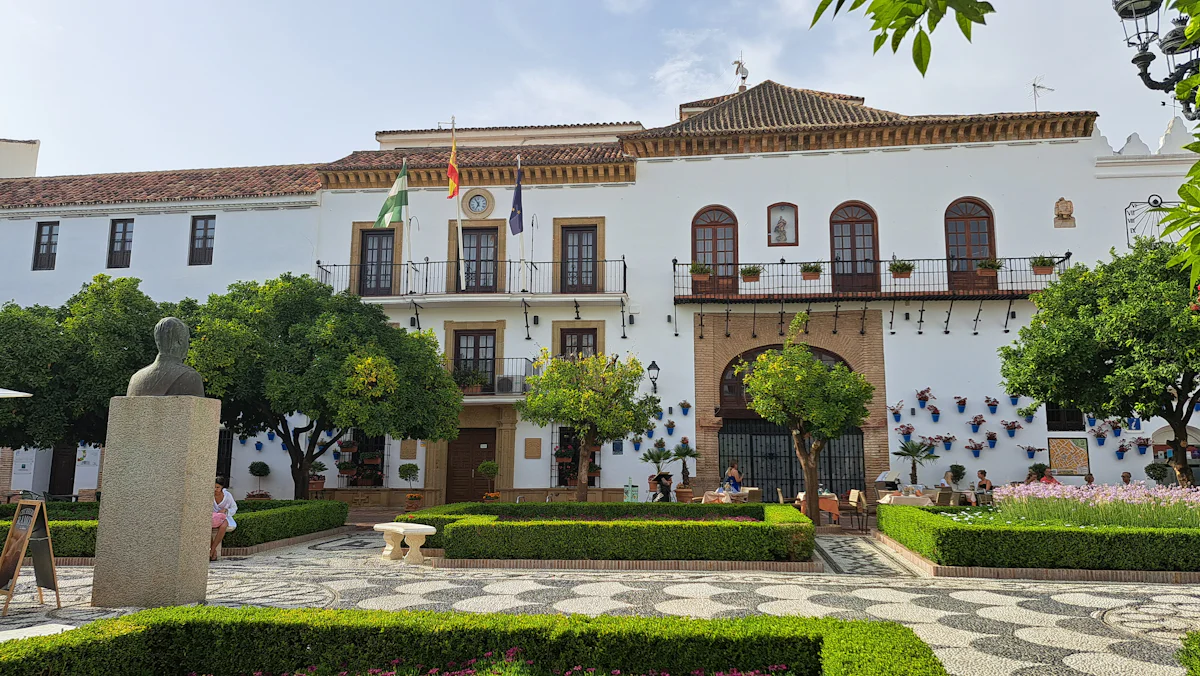
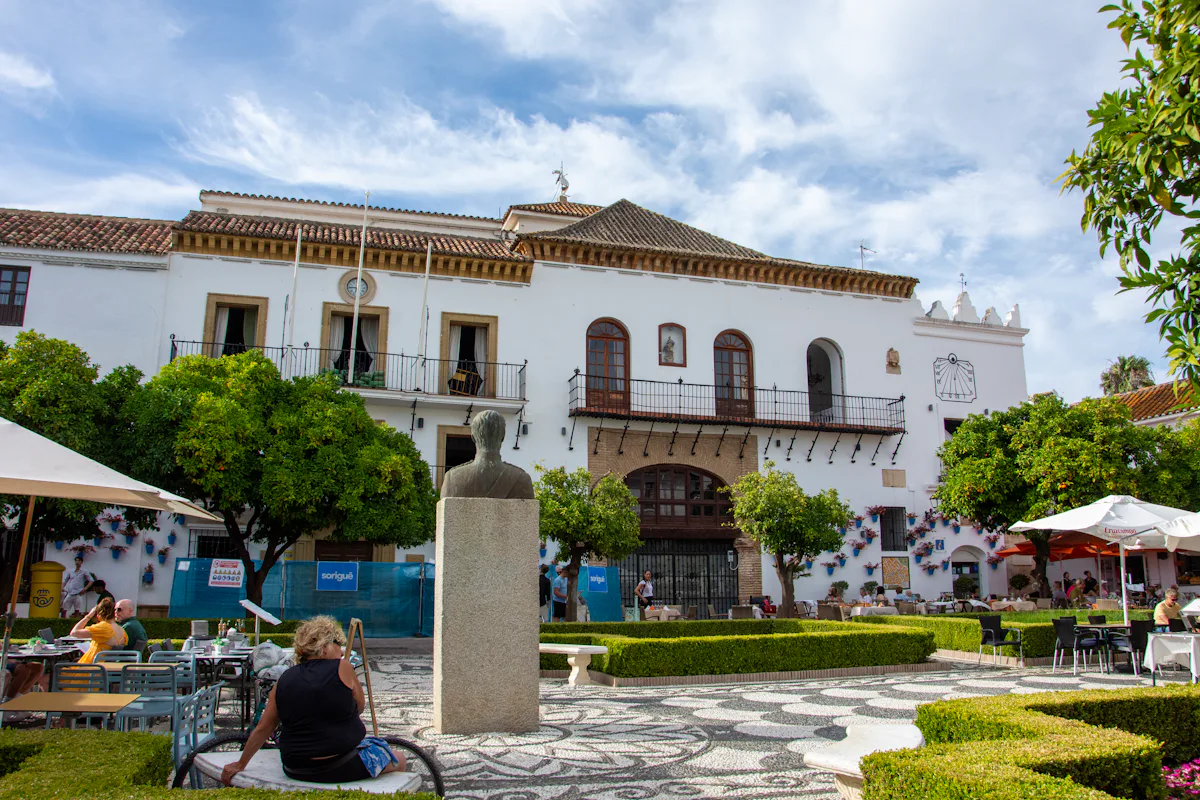
Every visit starts here. The square was laid out in 1485, right after the Christian conquest, to be the new civic centre of the town. Today its orange trees shade a Renaissance fountain and the terraces of restaurants that have been serving here for decades. It is busy at lunch and in the evening, and at its most peaceful in the morning, when the orange blossom (in spring) and the light on the white facades make it the best time for photos.
Three historic buildings frame the square:
- The Town Hall (Ayuntamiento): built in 1568 in Renaissance style and still Marbella’s town hall. Look for the sundial, the coat of arms and the stone plaques in Old Spanish, one of which commemorates the conquest of 1485.
- Casa del Corregidor: the 16th-century house of the chief magistrate, whose stone facade mixes Gothic, Mudéjar and Renaissance details. It now houses a restaurant with a terrace on the square.
- Ermita de Santiago: a simple 15th-century chapel and the oldest religious building in Marbella. It is easy to walk past, so look for the small white statue of Saint James on its outside wall.
2. Iglesia de la Encarnación and Plaza de la Iglesia
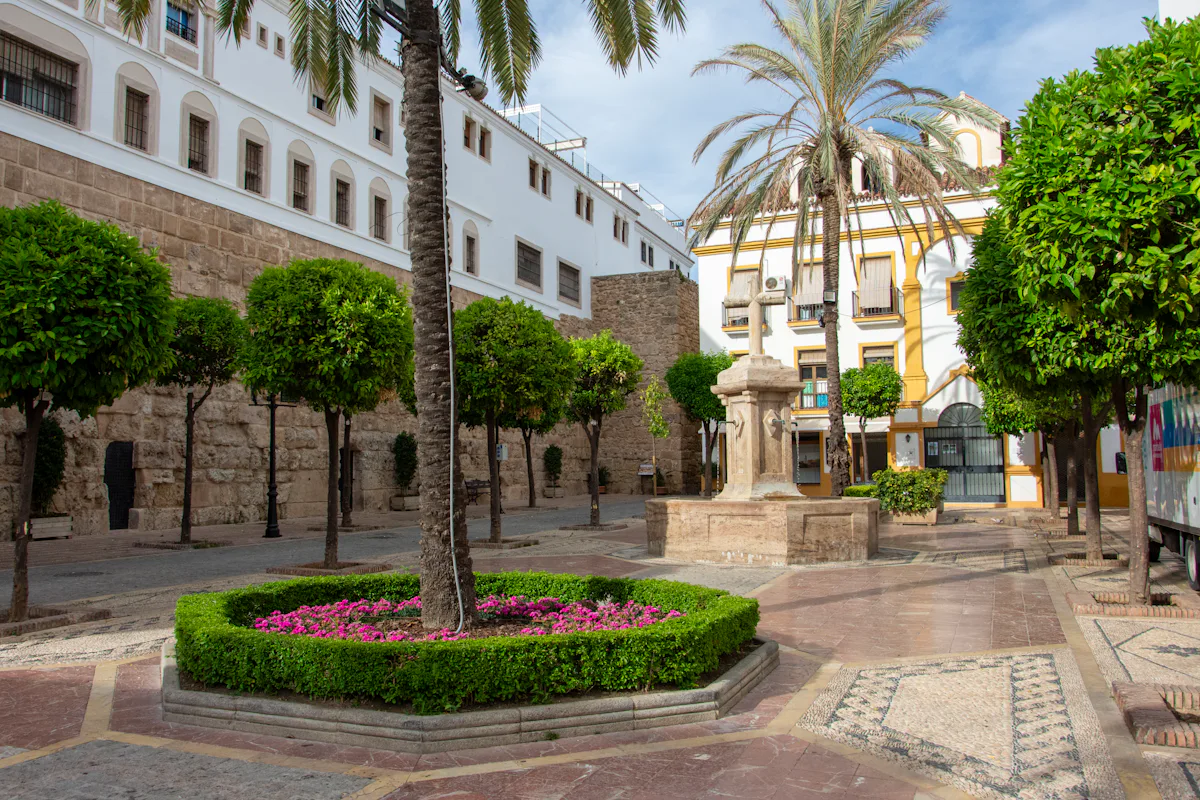
A couple of minutes north-east of Orange Square, the 17th-century Church of Our Lady of the Incarnation is Marbella’s main parish church and the largest in the Old Town. Its ornate stone doorway faces a small square with palm trees and a fountain. Step inside if it is open: the interior is richly decorated, and around Christmas there is a nativity scene. Opening times change between summer and the rest of the year, and it is a working church, so dress modestly and avoid visiting during Mass.
3. Calle Carmen and the Flower-Pot Lanes
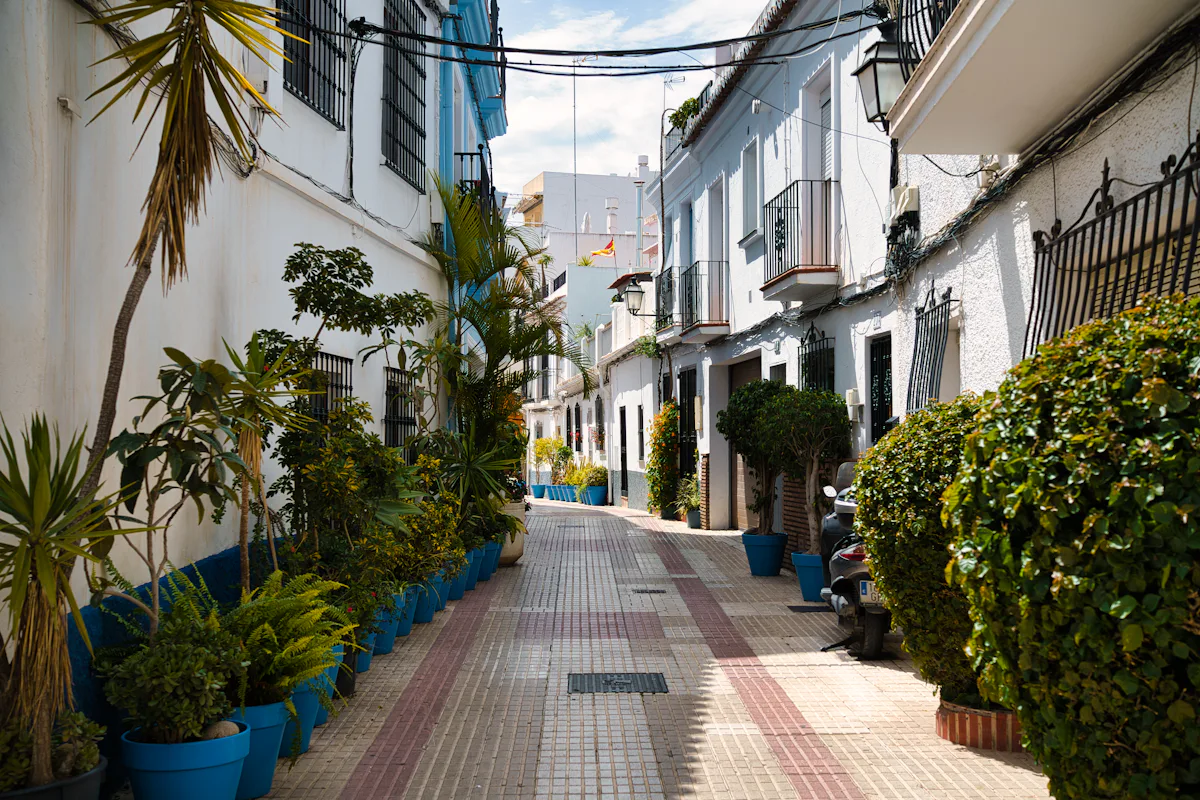
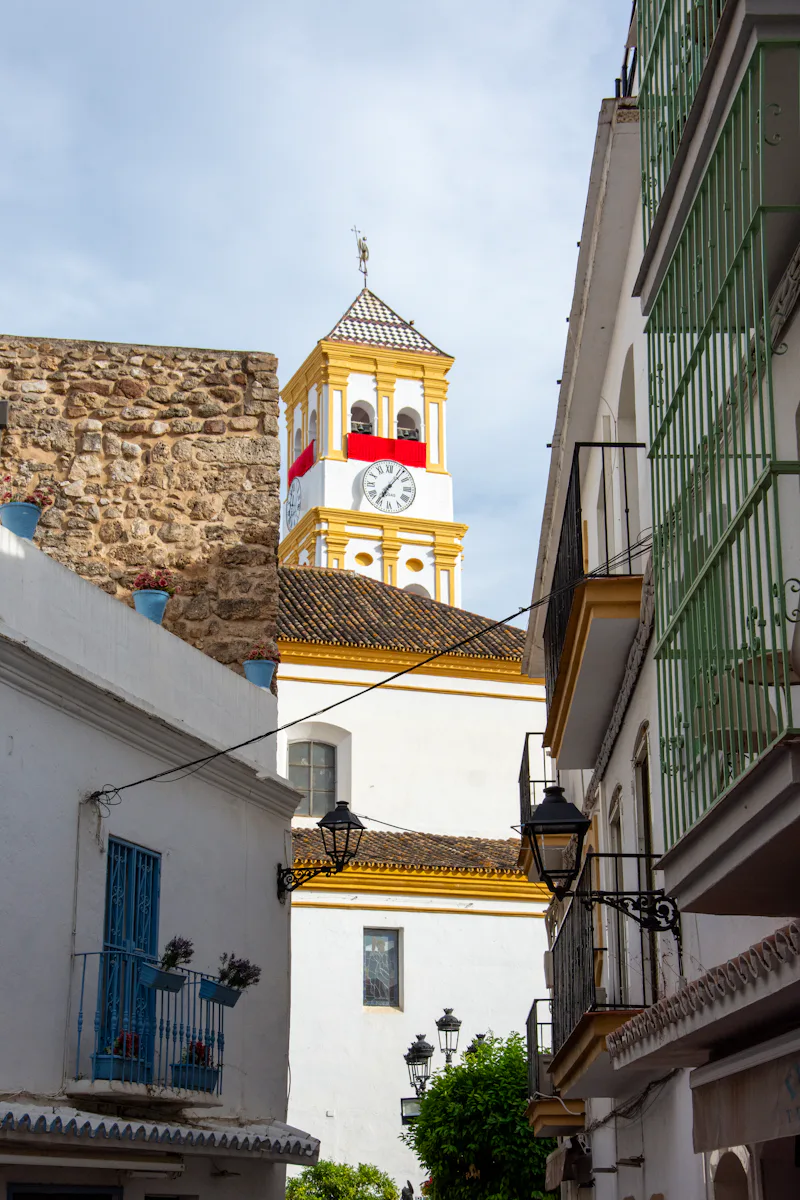
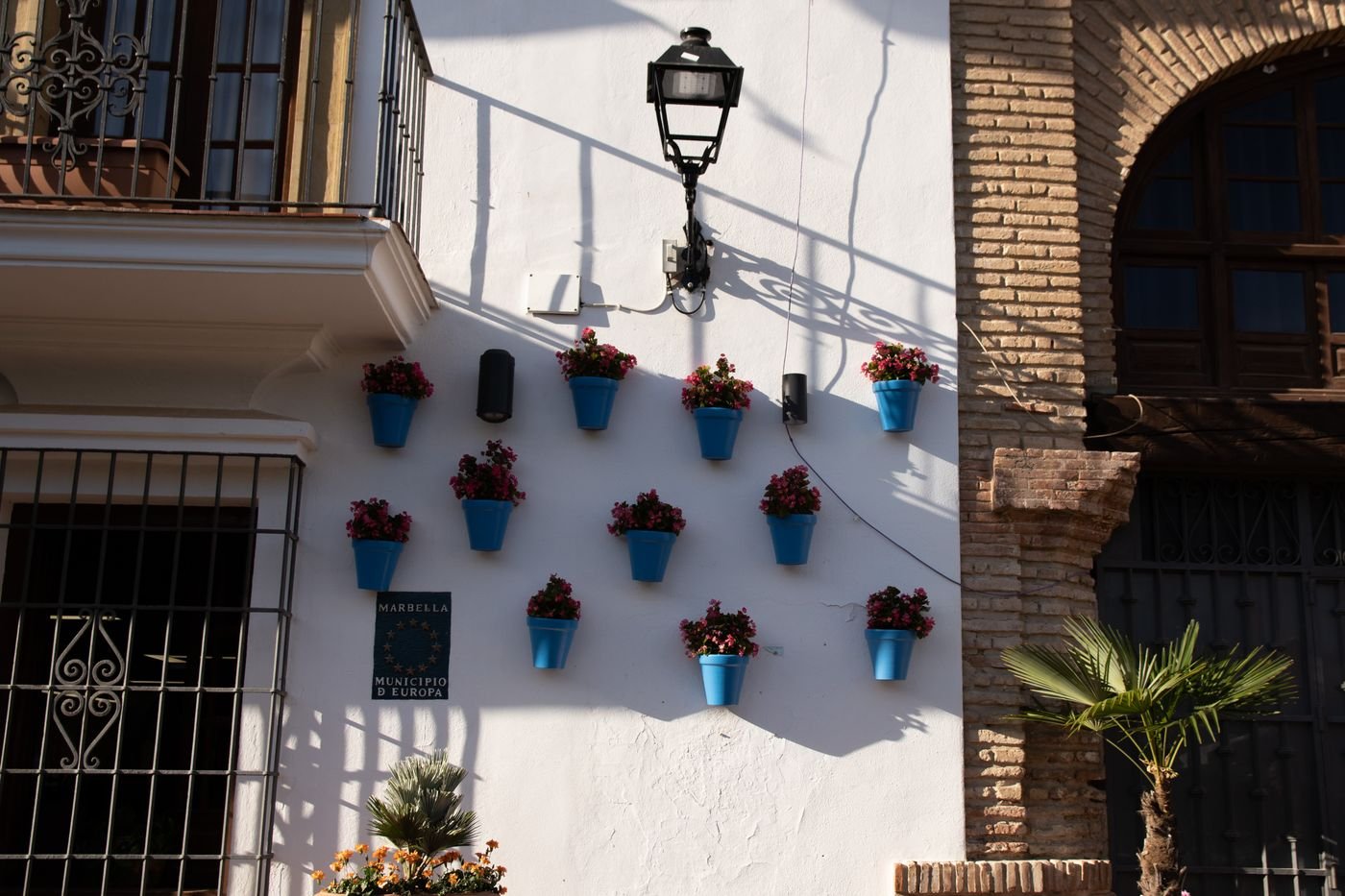
Marbella Old Town is famous for its whitewashed alleys lined with blue flower pots, and Calle Carmen is the most photographed of them all, with the church tower peeking out at the end. It gets crowded in summer, so come early. For a less busy shot, climb the steps alongside it, or simply wander: the lanes around Calle Ancha, Calle San Lázaro and Plaza de Santo Cristo are just as pretty.
4. The Moorish Castle Walls
Marbella’s Moorish fortress dates back to around the 10th century. Only sections of its walls and towers survive, mostly in the north-east of the Old Town around Calle Trinidad, and they are viewed from the street rather than visited inside. Look closely and you can spot re-used Roman stones in the masonry, a reminder of how many civilisations have passed through this stretch of coast.
5. Museo del Grabado (Contemporary Engraving Museum)
The best rainy-day or heat-of-the-day stop in the Old Town. The Museum of Contemporary Spanish Engraving is housed in the Hospital Bazán, a 16th-century Renaissance building with a strong Mudéjar character, founded after the death of local nobleman Alonso de Bazán. Its collection of prints and graphic art includes works by major Spanish artists such as Picasso, Miró and Dalí. It is usually open Monday to Saturday; check the Marbella tourism website for current hours and prices before you go.
6. Barrio Alto and the Ermita del Santo Cristo
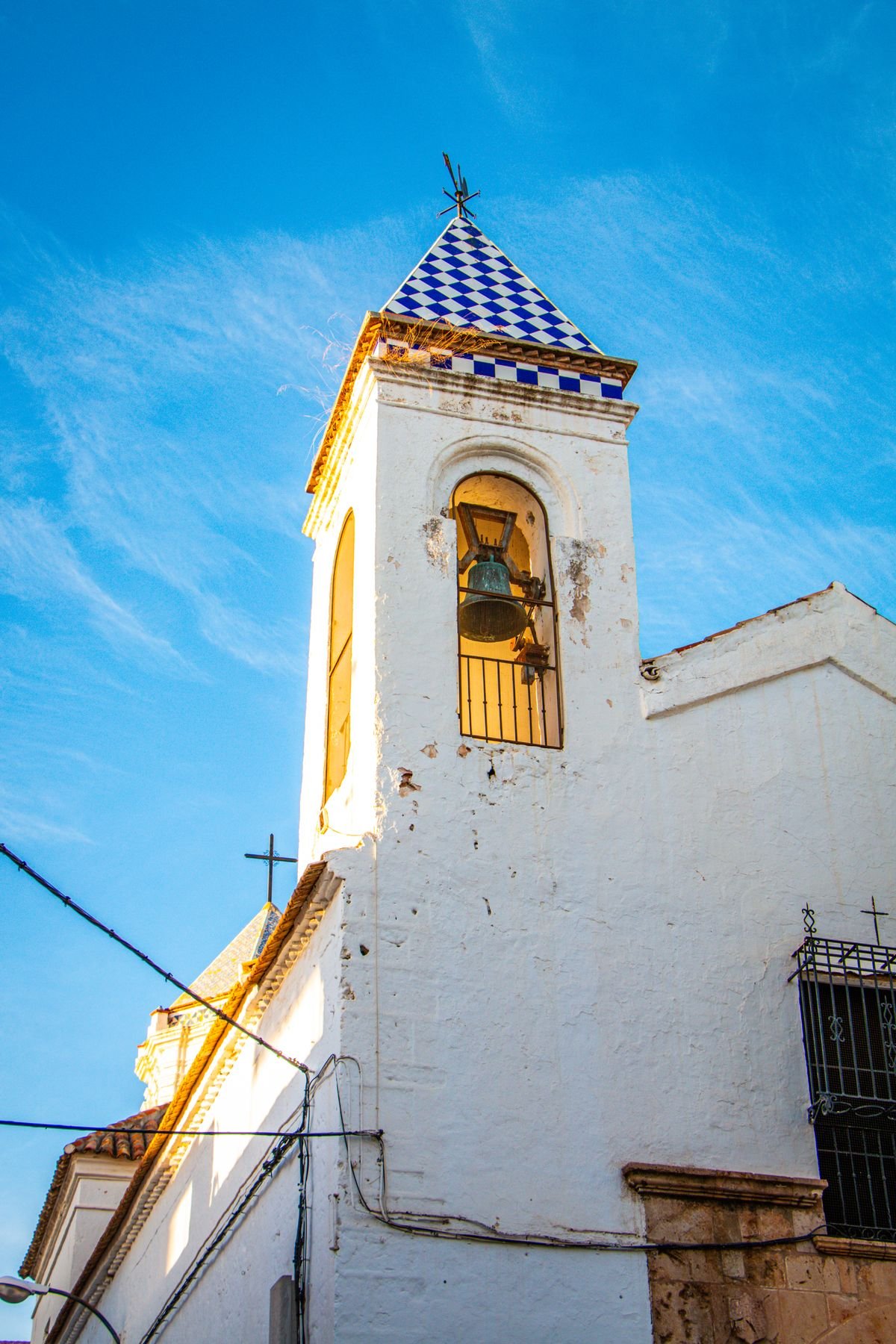
The upper part of the Old Town, the Barrio Alto, is quieter and more residential. Its landmark is the Ermita del Santo Cristo de la Vera Cruz, a 15th-century chapel enlarged in the 18th century, easy to recognise by its square bell tower topped with glazed ceramic tiles. The little square in front, Plaza de Santo Cristo, is one of the most charming corners of Marbella, with a fountain and outdoor tables in the evening.
7. Parque de la Alameda and the Dalí Sculptures
Just below the Old Town, the 18th-century Parque de la Alameda offers shade, benches decorated with painted tiles and a fountain. From here, Avenida del Mar leads down to the sea, lined with bronze sculptures by Salvador Dalí. It is the natural link between the historic centre and the beach, and a perfect start or end to your walk. For more ideas beyond the Old Town, see our best things to do in Marbella.
Self-Guided Walking Route (With Map)
This easy loop links all the highlights in about 2 kilometres. Walking time is under an hour, but allow 2 to 3 hours with stops, photos and a coffee on Orange Square. It works in either direction; starting at the sea and finishing in the quiet Barrio Alto means you walk slightly uphill at the start and end in the calmest part of town.
- Avenida del Mar: Dalí sculptures on the pedestrian boulevard by the sea.
- Parque de la Alameda: tiled benches and shade.
- Plaza de la Victoria: the entrance to the Old Town (and the main car park).
- Plaza de los Naranjos: Town Hall, Casa del Corregidor and Ermita de Santiago.
- Calle Carmen: the classic flower-pot photo.
- Iglesia de la Encarnación: the main church and Plaza de la Iglesia.
- Castle walls and Museo del Grabado: Moorish remains and the engraving museum in Hospital Bazán.
- Ermita del Santo Cristo: finish with a drink on Plaza de Santo Cristo.
Tip: the lanes are a maze and phone GPS can be imprecise between the tall walls. If you get lost, head downhill to reach Avenida Ricardo Soriano and the sea, or ask for “la Plaza de los Naranjos”: everyone knows it.
Where to Eat in Marbella Old Town
The Old Town has some of the most atmospheric dining in Marbella, from tiny tapas bars in alleys barely wider than your arms to candlelit courtyards. Restaurants right on Plaza de los Naranjos charge for the setting; wander a few streets away for better value.
- Bar El Estrecho: a Marbella institution serving homemade tapas since 1954 in one of the narrowest lanes in town. Go for the croquettes, meatballs, Russian salad and prawns pil-pil. Expect it to be packed.
- Taberna La Niña del Pisto: a rustic tavern on Calle San Lázaro known for its pisto (Spanish ratatouille) with egg, salmorejo and oxtail. Small and very popular, so book or arrive early.
- Bar Altamirano: a no-frills favourite for fried fish and seafood on Plaza Altamirano, good value and lively.
- Casa del Corregidor: tapas and Andalusian stews in the historic magistrate’s house, with tables on Orange Square.
- Casanis: a romantic courtyard restaurant for a special dinner, with French-Andalusian cooking.
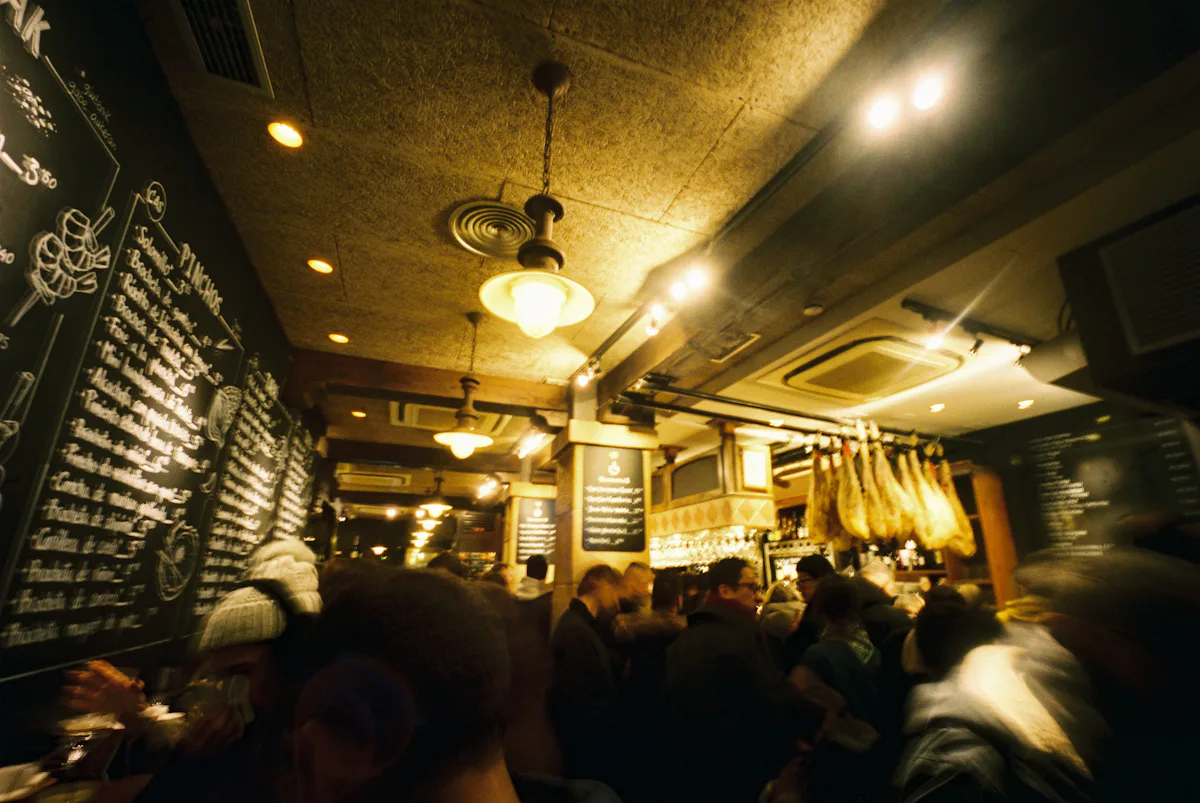
Remember that Spaniards eat late: lunch runs from about 2 pm and dinner rarely starts before 8.30 pm, and some kitchens close between services. For Michelin-starred tables and beach restaurants across town, see our guide to where to eat in Marbella.
Shopping in the Old Town
Forget the designer labels of Puerto Banús: the Old Town is about small independent shops. You’ll find fashion and linen boutiques, leather sandals, jewellery, ceramics, art galleries and delicatessens selling olive oil, wine and Iberian ham. The lanes around Plaza de los Naranjos, Calle Ancha and Calle Nueva are the best for browsing. The main shopping street for high-street brands is Avenida Ricardo Soriano, just south of the Old Town.
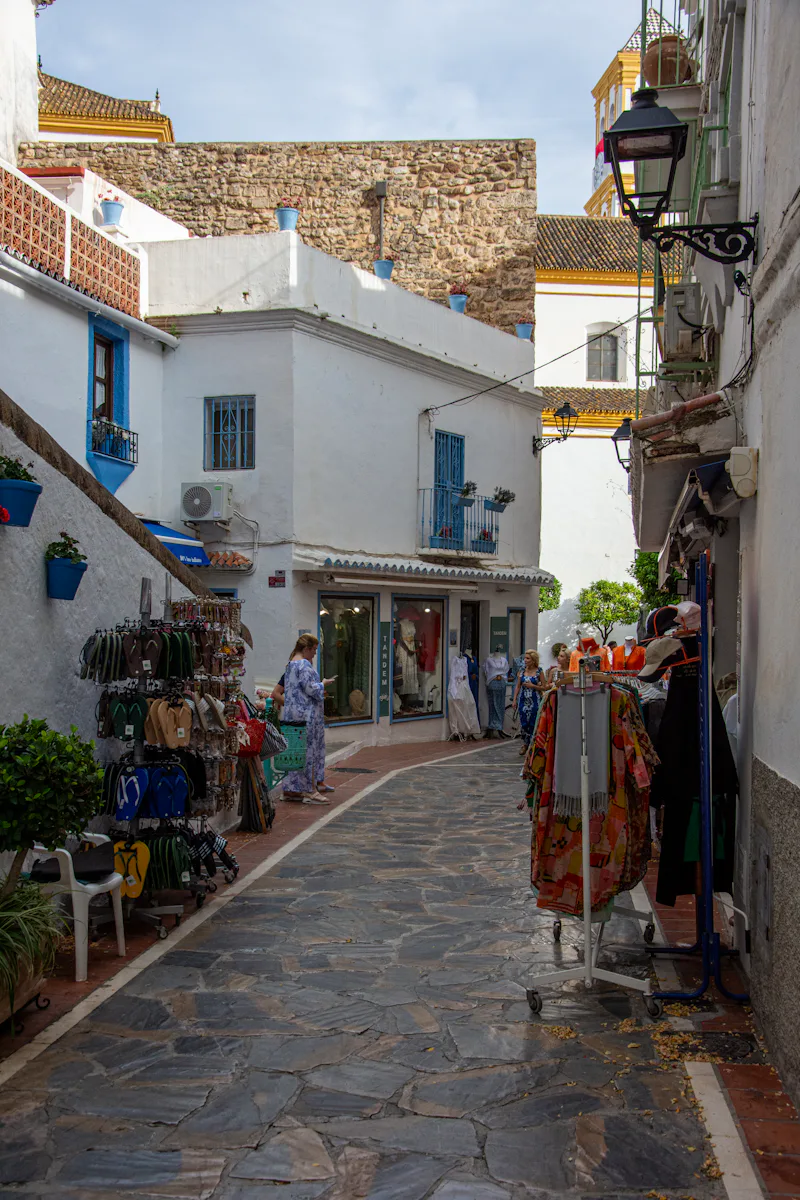
Keep in mind that many small shops close for a few hours in the afternoon and on Sundays, especially outside the summer season.
Getting There and Parking
You can’t drive into the Old Town, and you won’t want to. The easiest options are:
- On foot: from the seafront promenade, walk up Avenida del Mar and through Parque de la Alameda; you’ll be on Orange Square in 5 to 10 minutes.
- Parking Plaza de la Victoria: an underground car park (entrance on Calle Huerta Chica) right at the edge of the Old Town and a couple of minutes from Plaza de los Naranjos. It is open 24 hours, but spaces and ramps are tight and it is not cheap, so check current rates.
- Mercado Municipal car park: beside the municipal market at the northern edge of the Old Town; the vehicle entrance is at the corner of Avenida del Mercado and Calle Jacinto Benavente. A good alternative when Plaza de la Victoria is full.
- Parking Avenida del Mar: on the other side of Parque de la Alameda, handy if you also plan to go to the beach.
- By bus or taxi: many local buses stop on Avenida Ricardo Soriano, a short walk away. Ask a taxi to drop you at Plaza de la Victoria or the Alameda. See our guide to getting around Marbella without a car.
Arriving from the airport? Our Málaga Airport to Marbella guide compares the express coach, taxis and transfers.
Where to Stay in Marbella Old Town
Staying inside the Old Town means stepping out of your door onto orange-tree squares, with dinner a two-minute walk away and the beach less than ten minutes downhill. The trade-off: rooms are in converted townhouses, many have no lift, and cars can’t reach the door. The area suits couples, culture lovers and anyone who prefers atmosphere to a resort pool.
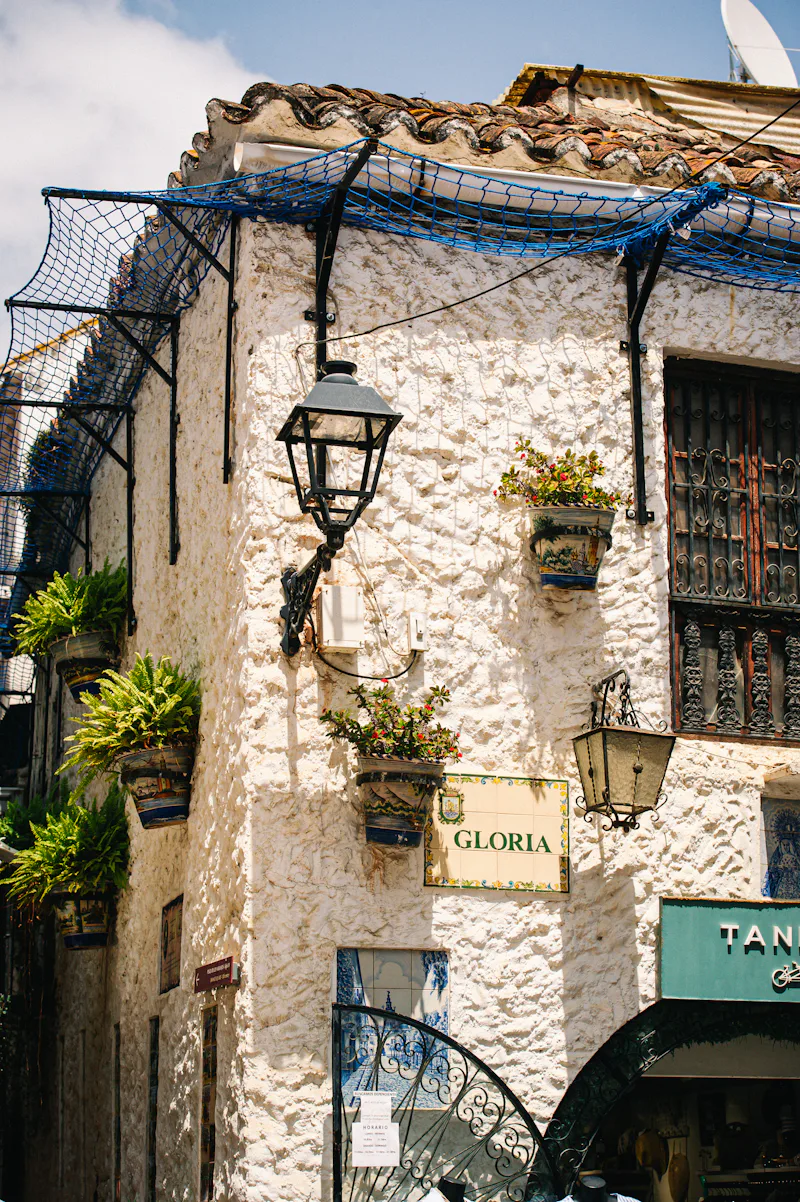
Popular choices include the adults-only The Town House, the stylish Maison Ardois on Calle Ancha, the historic Boutique Hotel Claude and good-value La Morada Más Hermosa. We compare them on noise, lifts, luggage access and best rooms in our guide to the best boutique hotels in Marbella Old Town. Travelling as a couple? See our romantic boutique hotels in Marbella, and if you are still deciding on an area, read where to stay in Marbella.
Tips for Visiting
- Go early or late: mornings are quiet and cool; evenings are lively, with the squares lit up and restaurant tables outside. Midday in July and August can be very hot.
- Wear flat shoes: the lanes are cobbled and polished smooth, and slippery after rain.
- Easter and Christmas: during Holy Week, processions wind through the Old Town, and in December the streets are decorated with lights. See our Christmas in Marbella guide.
- Combine it with the beach: the nearest beaches, Playa de la Venus and La Bajadilla, are a short walk away. Compare them in our best beaches in Marbella guide.
- Plan your season: the Old Town is lovely all year; see the best time to visit Marbella.
Marbella Old Town FAQ
Is Marbella Old Town worth visiting?
Yes. It is one of the best-preserved historic quarters on the Costa del Sol, free to explore, and it shows a completely different side of Marbella from the beach clubs and marinas. Even if you only have one day in Marbella, set aside a couple of hours for it.
How long should I spend in Marbella Old Town?
Two to three hours is enough to see the main sights at a relaxed pace. Add lunch or dinner and a visit to the engraving museum, and it easily fills half a day.
Can you walk from Marbella Old Town to Puerto Banús?
You can, but it is a long walk: roughly 7 km, or about an hour and a half, mostly along the seafront promenade past the Golden Mile. It is a beautiful stroll in the cooler months. Otherwise a taxi takes around 10 to 15 minutes depending on traffic, and local buses run along the main road. Find out more in our guide to the best hotels in Puerto Banús.
What is the main shopping street in Marbella?
Avenida Ricardo Soriano is the main commercial street, with high-street brands and banks, running just south of the Old Town. Inside the Old Town itself, shopping is about independent boutiques, galleries and delicatessens in the lanes around Plaza de los Naranjos.
Is Marbella Old Town suitable for families and wheelchairs?
Children usually love the maze of lanes and the fountains, and the squares are traffic-free. Pushchairs and wheelchairs are manageable on the main routes such as Plaza de los Naranjos and Calle Ancha, but some side lanes have steps and steep cobbles, so plan your route around the main squares.