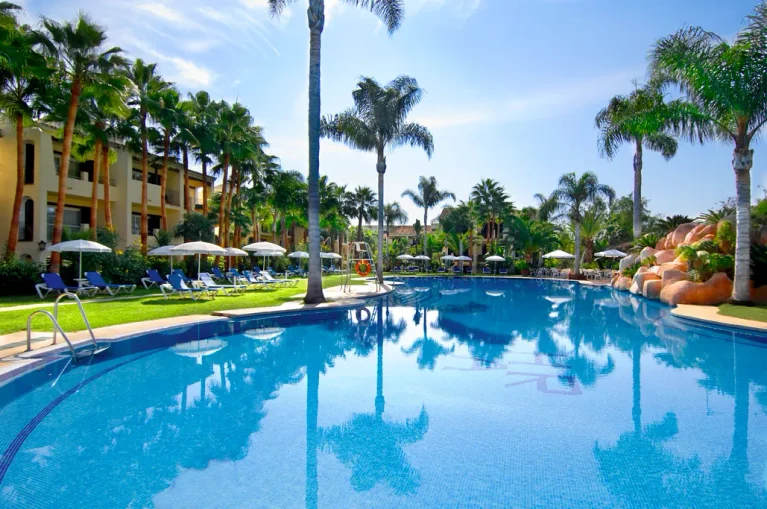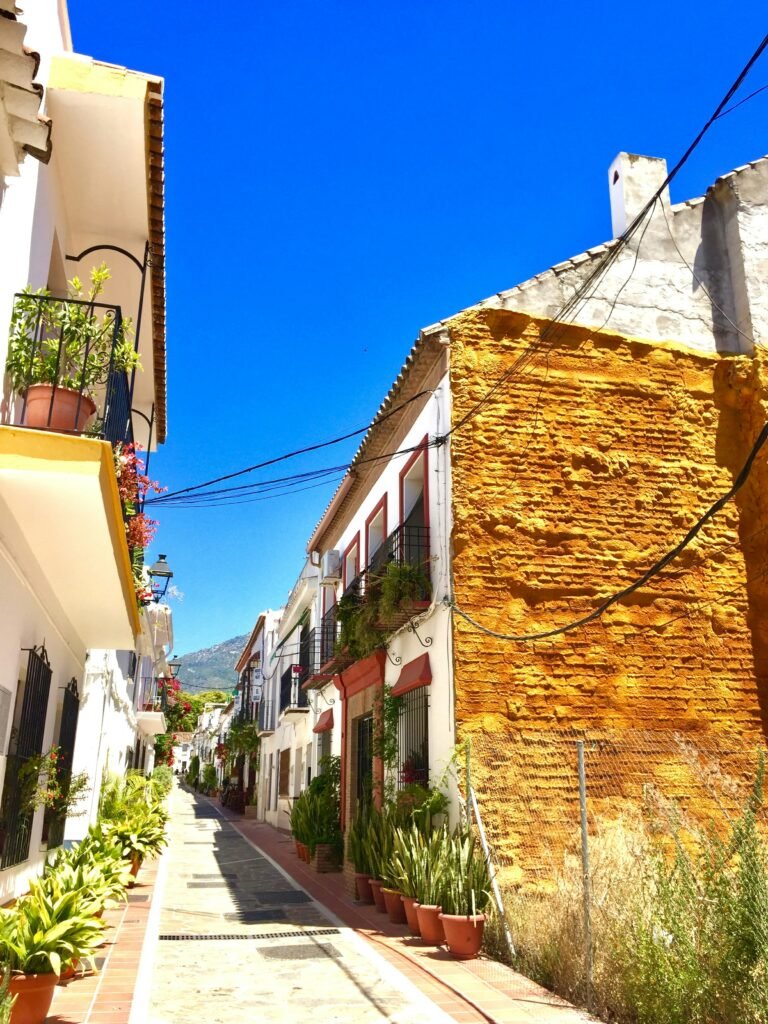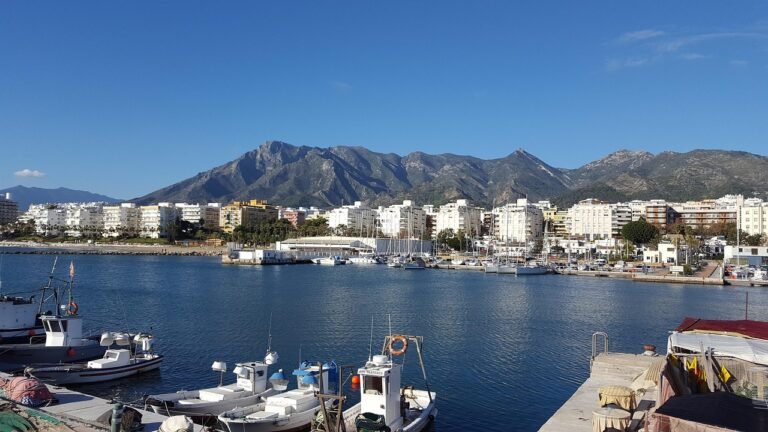

Marbella or Málaga? It’s the question almost everyone planning a Costa del Sol holiday asks, and forums are full of conflicting answers. The two are only about an hour apart and share the same sunshine, but they feel like different trips: Málaga is a real Spanish city of 600,000 people with Roman ruins, Moorish fortresses and nearly 40 museums, while Marbella is a glamorous resort town built around beaches, beach clubs and five-star hotels.
This guide compares them honestly, using current 2026 data on hotel prices, transport and costs, so you can decide where to base yourself, or whether to split your stay between both.
The short answer
- Choose Málaga for culture, food, a lively city break, better value and easy train trips to Granada, Córdoba and Seville.
- Choose Marbella for a beach holiday, luxury hotels, beach clubs, golf and a relaxed resort pace.
- No car? Málaga is easier: a 12-minute train from the airport and a compact, walkable centre.
- Can’t decide? Split your stay: 2–3 nights in Málaga, then the rest on the beach in Marbella.
Note: Prices and timetables are approximate and change with the season, so check them before you travel. Some links on this page are affiliate links: if you book through them we may earn a small commission, at no extra cost to you.
Marbella vs Málaga at a Glance
| Málaga | Marbella | |
|---|---|---|
| Vibe | Authentic Spanish city, cultural, buzzy | Upmarket resort, glamorous, relaxed |
| From the airport | 12 min by train (€1.80) | About 40–55 min by bus or car (50 km) |
| Beaches | 14 km of city beaches | 24 beaches along 27 km of coast |
| Culture | Alcazaba, Picasso Museum, Roman Theatre, nearly 40 museums | Pretty Old Town, Dalí sculptures |
| Average hotel rate (Aug 2026) | About €163 per night | About €378 per night |
| Eating out | Cheaper | Roughly 30% more expensive |
| Nightlife | Tapas bars, rooftop bars, student and local scene | Beach clubs, Puerto Banús clubs, VIP scene |
| Train connections | High-speed AVE to Madrid, Córdoba and beyond | No train station |
| Best for | City breaks, foodies, culture, budget travellers | Beach holidays, luxury, golf, families wanting resorts |
Getting There: Airport and Transport
Both destinations use Málaga-Costa del Sol Airport (AGP), and this is where Málaga has a clear head start.
- Airport to Málaga centre: the C1 local train takes about 12 minutes to Málaga Centro-Alameda and costs €1.80, running roughly every 20 minutes from early morning until around 1am. The express bus A costs €4 and takes 15–25 minutes, and a taxi starts from around €18–26 depending on the time of day.
- Airport to Marbella: Marbella is about 50 km away and, unusually for a town its size, has no train station. The direct Avanza bus takes around 45–55 minutes (about €10–12), a taxi costs roughly €80–95, and driving takes about 40 minutes on the AP-7. Our full guide to getting from Málaga Airport to Marbella compares every option.
- Between the two: Avanza buses link Málaga and Marbella in about 45 minutes on the fastest services (stopping buses take up to 1 hour 30), so a day trip in either direction is easy.
Once you arrive, Málaga’s historic centre is compact and walkable, with most sights within 15 minutes of Calle Larios. Marbella’s centre is walkable too, but its hotels are spread along 27 km of coast, so where you stay matters much more; see getting around Marbella without a car.
Beaches: Marbella Wins
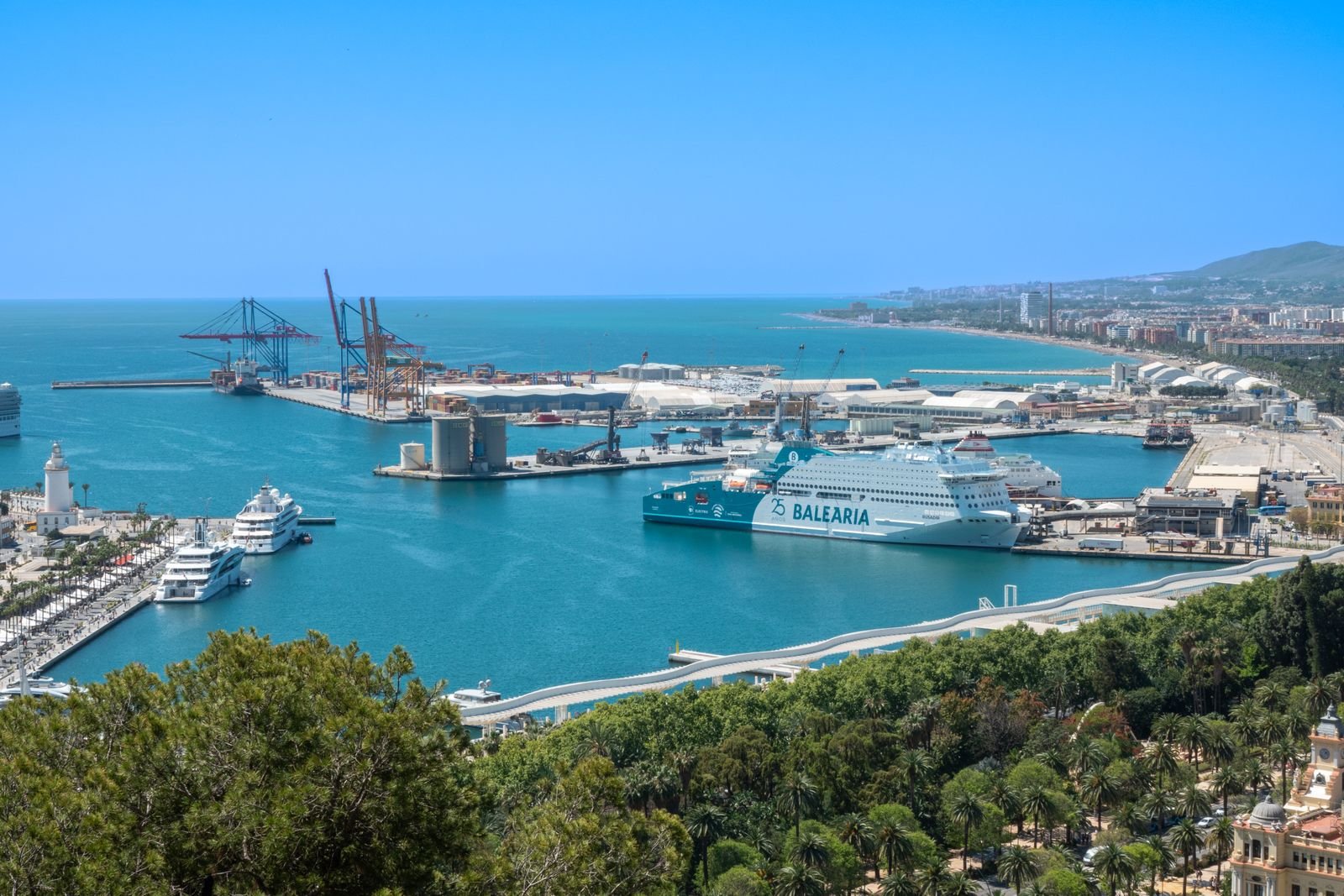
If the beach is the main reason for your trip, Marbella is the stronger choice. It has 24 beaches along 27 km of coastline, from lively town beaches and Golden Mile beach clubs to the wild pine-backed dunes of Cabopino and Artola. Many hotels sit right on the sand, so your sunbed is a few steps from your room. Compare them in our guide to the best beaches in Marbella.
Málaga isn’t beachless, though: the city has about 14 km of urban beaches. La Malagueta is roughly a 10-minute walk from Calle Larios, and further east, the old fishing districts of Pedregalejo and El Palo are lined with chiringuitos grilling espetos (sardine skewers). The difference is atmosphere: Málaga’s beaches are city beaches, Marbella’s are the heart of a beach holiday.
Culture and Sightseeing: Málaga Wins
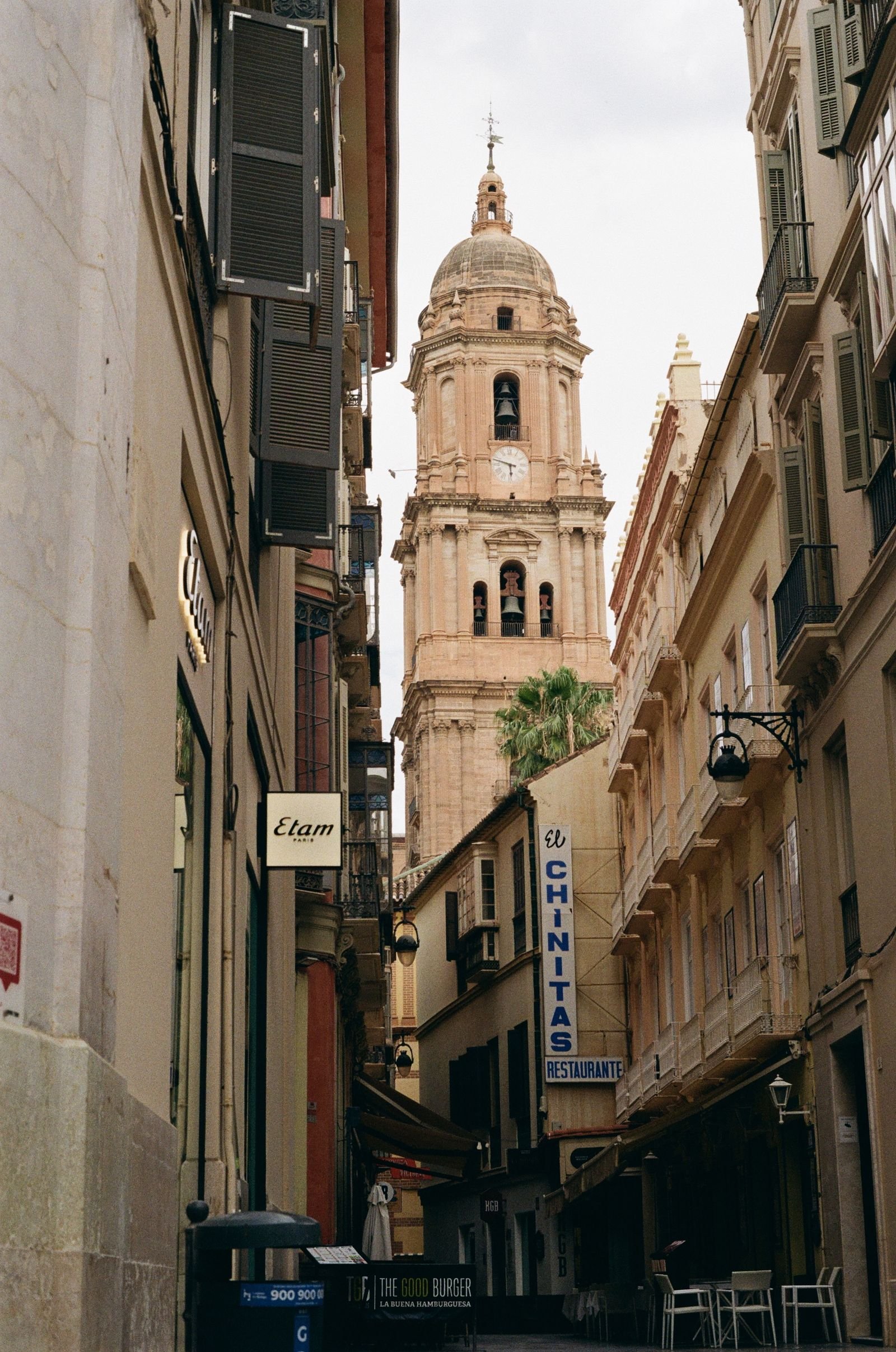
For sightseeing, Málaga is in a different league. Within a short walk of each other you’ll find:
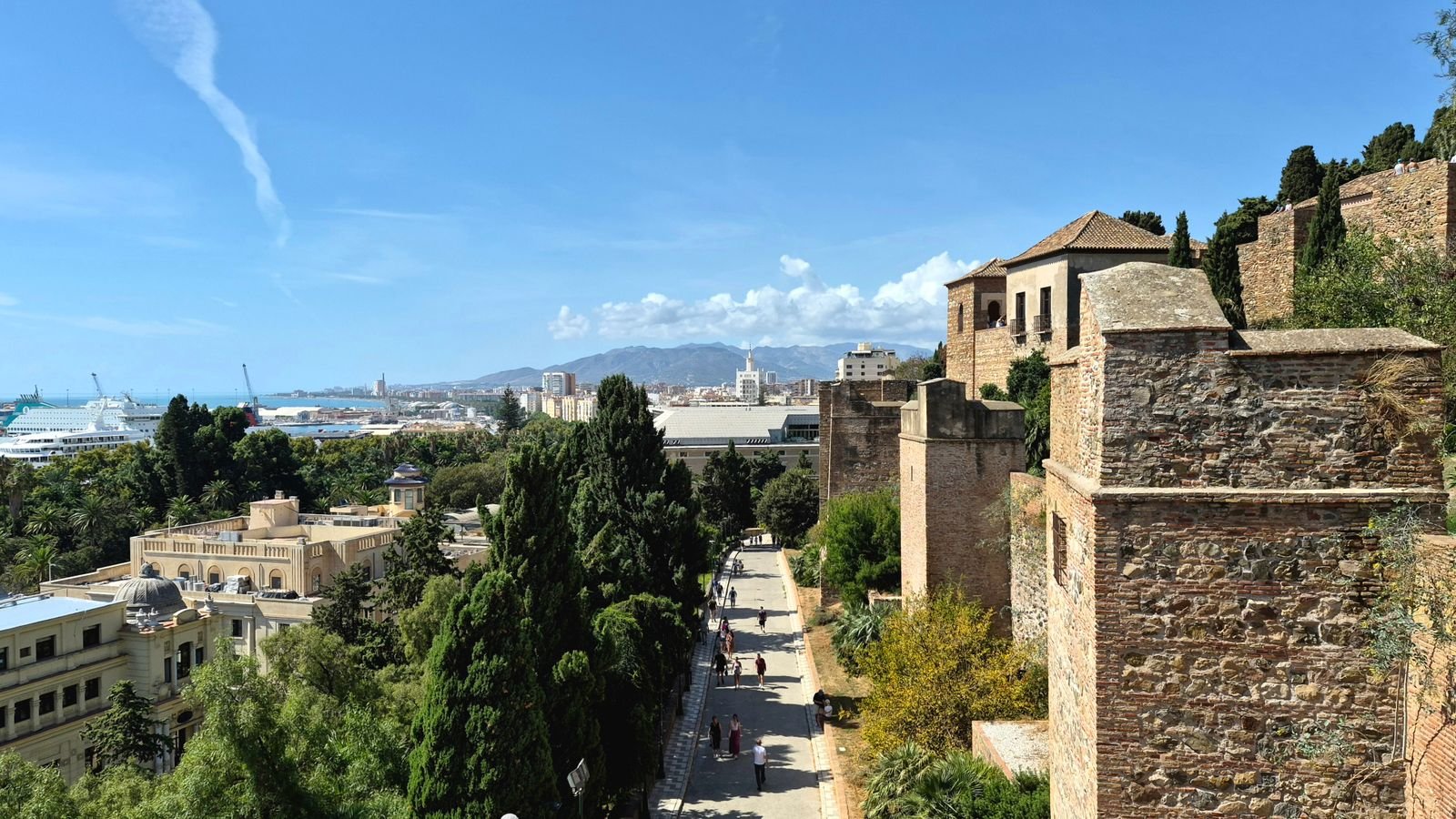
- The Alcazaba and Gibralfaro Castle: an 11th-century Moorish fortress-palace linked by walls to a 14th-century castle on the hill above, with the best views over the city and port.
- The Roman Theatre: a 1st-century theatre at the foot of the Alcazaba, free to view from the street.
- Málaga Cathedral: nicknamed La Manquita (“the one-armed lady”) because its second tower was never finished.
- Picasso’s city: the Museo Picasso Málaga in a 16th-century palace, and the artist’s birthplace on Plaza de la Merced.
- Art museums: the Carmen Thyssen Museum (19th-century Spanish painting) and the colourful Centre Pompidou Málaga on the port, whose agreement has been renewed until 2035. In total the city counts nearly 40 museums and exhibition spaces.
- Everyday Málaga: the 19th-century Atarazanas food market, the street-art district of Soho and the palm-lined Muelle Uno port promenade.

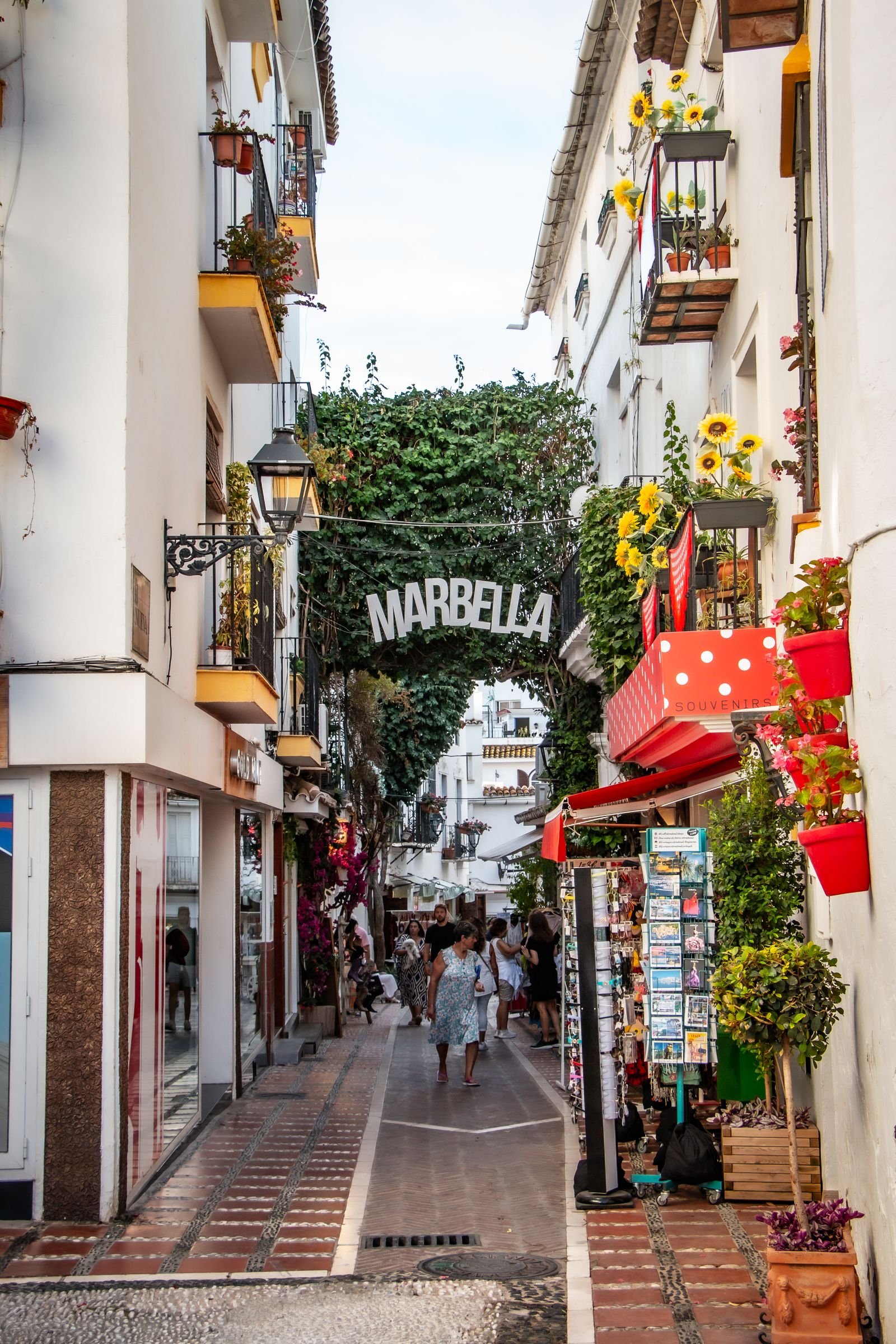
Marbella’s cultural side is smaller but charming. Its Old Town is one of the prettiest on the coast, with whitewashed lanes, flower-filled balconies and the orange trees of Plaza de los Naranjos, and Avenida del Mar is lined with bronze sculptures by Salvador Dalí. You can see the highlights in a morning; in Málaga you could fill three days. For ideas, see our list of the best things to do in Marbella.
Food and Nightlife: Different Styles
Málaga is a food city first. Evenings revolve around tapas crawls through the old town, sweet Málaga wine in century-old bars, rooftop terraces with cathedral views, and seafood at the beach bars of Pedregalejo. The nightlife is local and relaxed, with a younger crowd and plenty of choice at every budget.
Marbella does glamour. Days drift from long beach-club lunches to sunset cocktails, and Puerto Banús keeps going until dawn with superyachts, designer boutiques and VIP clubs. It also has the coast’s most celebrated fine dining, including Skina, which holds two Michelin stars. Browse our guides to the best restaurants in Marbella and the best beach clubs in Marbella.
Costs: Málaga Is Much Cheaper
This is the biggest practical difference. According to regional statistics based on INE data, the average hotel room in August 2026 cost about €163 a night in Málaga and about €378 in Marbella, more than twice as much. Eating and drinking out is also cheaper in Málaga, by roughly 30% according to crowd-sourced Numbeo data:
| Typical price (estimate) | Málaga | Marbella |
|---|---|---|
| Average hotel night (Aug 2026) | €163 | €378 |
| Meal at an inexpensive restaurant | €15 | €20 |
| Three-course meal for two, mid-range | €60 | €80 |
| Pint of local beer | €3 | €4 |
| Cappuccino | €2.40 | €3.30 |
Marbella can still be done on a budget, especially outside July and August and away from the Golden Mile and Puerto Banús: see our best budget hotels in Marbella. Neither city charges a tourist tax as of 2026, although Málaga’s council has asked for the law to change, so check before you travel.
Day Trips: Which Is the Better Base?
Málaga is the better base for exploring Andalusia by train. From María Zambrano station, high-speed trains reach Córdoba in about an hour and Madrid in around 2 hours 50, Granada (for the Alhambra) is about 1 hour 20 on a direct train or 1 hour 45 by bus, and Seville is around 2 hours. The Caminito del Rey is about an hour away by car or train. (The high-speed line to Madrid was disrupted in early 2026 and has been running normally since July 2026.)
Marbella is the better base for the western Costa del Sol: Ronda, Gibraltar, Estepona, Benahavís and the white villages are all closer, and Puerto Banús is on your doorstep. You’ll want a car or a tour for most of them. See our guide to the best day trips from Marbella.
Weather: A Tie
Don’t choose based on weather. The two share almost identical climates: official AEMET data for Málaga airport shows an average annual temperature of about 18.5°C and around 2,900 hours of sunshine a year, and Marbella’s figures are practically the same. Marbella is slightly more sheltered by the Sierra Blanca mountains, but you’re unlikely to notice. For month-by-month advice, read our guide to the best time to visit Marbella.
Which Should You Choose? By Type of Traveller
- First-time visitors to Spain: Málaga, for the history, food and easy logistics, with a day trip to Marbella.
- Beach lovers: Marbella, ideally in a beachfront hotel.
- Couples: Marbella for a romantic, relaxed escape (see our romantic boutique hotels); Málaga for a lively city break.
- Families: Marbella’s resorts with pools and kids’ clubs are hard to beat (see our family hotels); Málaga works well for short city stays with older children.
- Budget travellers: Málaga, where your money goes much further.
- Luxury and golf: Marbella, home to the Golden Mile’s iconic five-star resorts and dozens of golf courses.
- Travelling without a car: Málaga, thanks to the airport train, walkable centre and rail connections.
The Best of Both: Split Your Stay
With a week or more, you don’t have to choose. Spend the first 2–3 nights in Málaga to see the Alcazaba, the museums and the tapas bars (the airport train makes arrival easy), then take the bus or a taxi down the coast for 4–5 relaxed beach days in Marbella. If you only have a few days and want mostly beach, stay in Marbella and visit Málaga as a day trip: it’s around 45 minutes by bus.
Where to Stay in Málaga and Marbella
Best Hotels in Málaga
- Gran Hotel Miramar (luxury): a 1926 seafront palace beside La Malagueta beach, restored and reopened as a five-star hotel in 2016. Check prices on Booking.com
- Catalonia Molina Lario (upper mid-range): right next to the cathedral, with a rooftop pool overlooking the cathedral and the port. Check prices on Booking.com
- Room Mate Valeria (mid-range): modern design on Plaza de la Marina, steps from Muelle Uno and Soho, with a rooftop pool and sea views. Check prices on Booking.com
- Soho Boutique Málaga (good value): a small, well-reviewed three-star near Calle Larios; rooms are compact, but the location is excellent. Check prices on Booking.com
Best Hotels in Marbella
- El Fuerte Marbella (luxury, walkable): a renovated beachfront classic a few minutes’ walk from the Old Town, ideal if you don’t want to rent a car. Check prices on Booking.com
- Hotel Central Boutique (budget): a simple, central base close to the Old Town and the beach. Check prices on Booking.com
- La Morada Más Hermosa (charming Old Town guesthouse): a family-run townhouse around a flower-filled courtyard. Check prices on Booking.com
Still unsure which part of Marbella suits you? Our guide to where to stay in Marbella compares the Golden Mile, Puerto Banús, the Old Town and the quieter east.
Frequently Asked Questions
Is it better to stay in Málaga or Marbella?
It depends on your trip. Stay in Málaga for culture, food, value and easy transport; stay in Marbella for beaches, luxury hotels and a resort atmosphere. With a week or more, many travellers split their stay between the two.
Is Marbella or Málaga cheaper?
Málaga is clearly cheaper. In August 2026 the average hotel night was about €163 in Málaga versus about €378 in Marbella, and eating out is roughly 30% cheaper in Málaga.
How far is Marbella from Málaga?
Marbella is about 60 km from Málaga city and about 50 km from Málaga Airport. It takes around 40–50 minutes by car, or about 45 minutes on the fastest Avanza buses.
Can you visit Marbella as a day trip from Málaga?
Yes. Take an early bus, explore the Old Town and Plaza de los Naranjos, walk the seafront promenade and, if you have time, continue to Puerto Banús before heading back in the evening.
Do I need a car in Málaga or Marbella?
Not in Málaga, where the centre is walkable and the train links the airport, the city and other Andalusian cities. In Marbella a car is optional if you stay centrally, but useful for day trips to Ronda, Gibraltar or the white villages.
Which is better in winter, Málaga or Marbella?
The weather is almost identical, with mild days in the mid-to-high teens. Málaga usually has the edge in winter because its museums, markets and restaurants keep the city lively all year, while some of Marbella’s beach clubs close outside the summer season.
Our Verdict
Choose Málaga if you want a real Spanish city with history, museums, great food and good value, and Marbella if your ideal holiday means beaches, pools, beach clubs and a touch of luxury. Both are wonderful, they’re only about 45 minutes apart, and the best Costa del Sol trips often include a taste of each.